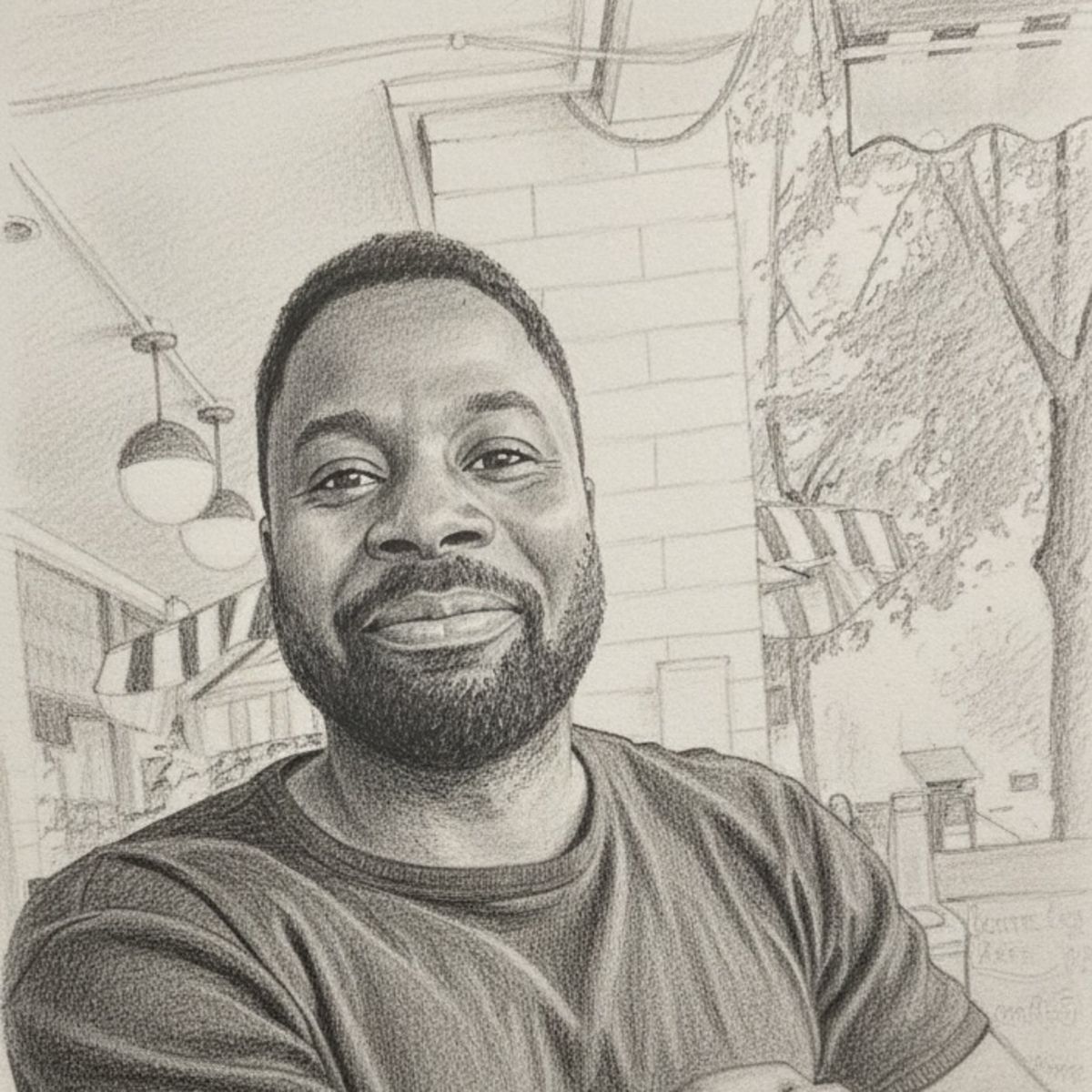

I recently sat down with Ashley Smith on Canada Now for a conversation that ended up covering a lot of ground — Vancouver's tech arc, the venture capital squeeze, what a moat actually looks like in 2026, and why I keep showing up to rooms full of real people when most of the world has gone digital.
That conversation shook loose a bunch of thoughts I've been meaning to write down. So here they are. Twenty-six of them. Some short. Some not. None of them fully resolved — which is probably as it should be.
Ecosystem is actually the right word.
I know people groan when they hear it. I used to too. But when I moved to Vancouver in 2015 and went to my first Tech Fest at the Vogue Theatre — hundreds of people, the CEO of Mobify on stage — I understood what the word meant. These different, interdependent parts, relying on each other to grow organically. That's what an ecosystem is. It doesn't need a rebranding. It just needs to be honest about what it is and where it actually is in its cycle.
The 2021 moment was real. And it inflated everything.
Interest rates near zero. Quantitative easing. Money that felt free. There was roughly a 12-month stretch where I'd wake up on a Tuesday morning and just wait for the unicorn press release to land in my inbox. Dapper Labs. Semios. Visier. Nexii. Layer Zero Labs. Thinkific and Abcellera’s IPOs. Galvanize getting acquired for a billion dollars.
These were real companies with real people building real things. The problem wasn't the builders — it was expectations that got decoupled from fundamentals. When the correction came, it was sharp. Stocks dropped 95%. Public companies went private. Valuations got cut by a factor of ten.
That period still mattered. It put the ecosystem on the map. But it also created a cohort of founders who came up during a hype cycle and are now learning what building actually looks like when the tide goes out.
We are in the pragmatic reset. It's a good thing.
Right now, founders are asking harder questions before they even talk to investors. What kind of business is this, really? Is this venture-scale or is this a good business? Are those the same thing? Do they have to be?
I think the reset is healthy. The best founders I'm talking to right now are doing more before they raise — because they can. The tools exist. The question of "am I actually building something?" is being asked earlier in the process. That's not a crisis. That's maturity.
Younger founders are quietly rewriting the playbook.
I'm 37. I'm not that old. But I've noticed something in the last couple years — younger builders are publicly, almost defiantly, rejecting how the previous generation did things. They're not rushing to raise money from the Valley. They're not running panel events because "that's not how people want to engage anymore." They're experimenting faster, committing less early, and building more before asking for capital.
Some of this is circumstance — the tools available to them are genuinely different. But some of it is a generational posture shift. They watched the hype cycle. They don't want it.
The middle of the market is hollowing out. Not just in VC.
I keep seeing the same pattern everywhere I look. In venture capital: you're either writing tiny checks at pre-seed with high risk tolerance, or you're a large fund that can only deploy at scale. The companies in the middle — good growth, not explosive growth — are getting overlooked. They're not risky enough to be exciting early and not big enough to justify a late-stage fund's attention.
Four years ago, these would have been fundable companies. Today, they're stuck.
But this isn't just a VC phenomenon. Go look at consumer brands: everyone's at Dollarama or Costco, or they're buying Louis Vuitton. The aspirational middle-class brand is struggling to exist. Go look at media: you're the New York Times or you're a focused community publication. The mid-size regional newspaper is dying. The dumbbell is everywhere.
There are maybe fewer genuinely investable software companies. That's okay to say out loud.
When the CVCA rings the alarm on declining pre-seed investment, everyone scrambles to explain it. But maybe the simpler answer is: there are fewer companies worth the risk at that stage. If you can build the core functionality of a SaaS product in an afternoon with AI tools, that changes the calculus for investors. Product development is essentially free. Distribution and data are not.
I'll get in trouble for saying this, but a company like Thinkific — which went public at a billion-dollar valuation and has since dropped 95% — could probably be rebuilt in a weekend with the tools available now. I don't say that to be cruel. I say it because investors are running the same math, and it's changing what they'll back.
Investors are kind of like doctors. Go to ten, get ten different answers.
I have a lot of friends in venture. I love them. I am not going to talk shit about them — publicly. But I will say this: the signal-to-noise ratio in investor feedback is lower than most founders expect. The range of conviction on any given company is enormous. Two partners at the same fund can have completely opposite reads on the same pitch.
Take it all in. Don't treat any single conversation as the verdict.
The moat question is the question right now.
If anyone can build software in an afternoon, what actually creates defensibility? I've been asking founders and investors this question at events for the past year, and three things keep coming up. Not ten. Three.
Moat #1: Proprietary data.
Even as AI tools become more capable, they all run on data. If you have data that nobody else has — actual, real, proprietary data — that's a genuine advantage. It doesn't go away when someone builds a better model. It compounds. The companies that understood this early and built their data flywheels will be hard to catch.
Moat #2: Speed.
If product development is essentially free, the advantage shifts to iteration velocity. Can you learn faster than the next team? Can you pivot in a week when the data tells you to? Speed to build, speed to learn, speed to fail and course-correct — this is a real moat. It's not glamorous. It's also not something you can buy.
Moat #3: Your offline relationships.
This is my favourite one, and I think it's the most underrated. What are your actual, real-world interactions with customers, stakeholders, and community? Not your follower count. Not your email open rate. The rooms you're in. The phone calls you make. The dinners you host.
For startups, media organizations, service businesses, consumer brands — I think the most powerful differentiator right now is your offline relationship with the people you serve.
This has always been true. But as the online world fills with synthetic content and bot traffic, the offline relationship becomes even more scarce, and therefore even more valuable. The moat is real life.
There's a difference between an audience and a community. Most organizations have an audience.
An audience consumes what you produce. A community has a relationship — with you and with each other. At the Tech Journal, we've been deliberate about making that shift. It's not just about publishing more content. It's about changing the nature of the connection. Readers become participants. Participants become advocates. The publication becomes a home base, not just a feed.
That's why we can differentiate. Anyone can read tech news. Not everyone can be part of something.
Big events are fun. Small events are where things actually happen.
I've been running events for years. Our big Tech Journal gatherings can pull 120 people into a room. It feels good. It's broad and buzzy and everyone has a drink in their hand and there's energy in the air.
And then I set up a private room that fits 10 people, and that's where the real conversations happen.
Over the last year we've doubled down on 12-person dinners. Founders around a table. 90 minutes. The question on the table: what are you actually struggling with right now, and is there someone here who can help? The feedback is consistently that these are the most valuable things we do. Recently we did the same format with 15 restaurant owners. Half of them said they'd never had a conversation like that with their peers before. Which is remarkable, and also totally believable.
The Q&A mic is a wasted opportunity. Every single time.
Here's a practical thing I tell people constantly: when you get the microphone during a Q&A at an event, don't immediately launch into your question. Take 15 seconds. Say who you are, what you're working on, and who you want to meet. You've just done a pitch in front of 120 people for free.
I watch this opportunity get wasted at almost every event I go to. Someone gets the mic, launches into a six-sentence question with no context, sits back down. Nobody knows who they are. Nobody knows how to find them. They've left with nothing but the answer to their question.
Use the mic.
The best way to network is to do interesting work in public.
I didn't come up with this line but I repeat it constantly: most people go to events trying to "work the room." But the other way to build a network is to do interesting work in public and let the network form around you.
Write about what you care about. Show up to things and ask real questions. Build something and talk about building it. The people who share your interests will find you. You don't have to hunt them. You just have to be findable.
And if you want to be in a great community, here's the other thing: you don't have to wait to be invited. You can be the person who starts it.
A lot of people — especially younger people who came of age during COVID — are waiting for permission or a companion before they go to an event alone. They're looking for a social proof signal that it's safe to show up.
It's safe. Go. Talk to people. Be curious and dumb for ten minutes until you understand something new. The worst thing that happens is you have one awkward conversation. The best thing that happens is you meet someone who changes the direction of what you're building.
The internet is being handed over to machines — on both ends.
Chris Anderson — former editor of Wired — wrote about three shifts in content: the democratization of production (creative tools got cheap, everyone could make things), the democratization of distribution (social media let anyone share), and the rise of algorithmic discovery (platforms got good at matching content with people who'd like it).
He wrote this roughly 20 years ago. The key assumption underlying all three shifts: humans were doing the creating. We had a monopoly on making things.
That assumption no longer holds. AI creates. AI distributes. AI decides what gets shown to whom. And the viewer on the other end — increasingly — might not be human either.
What is people's role in a web that's dominated by content created by AI, distributed by AI, and engaged with by AI? Doesn't sound like an interesting place.
The dead internet theory stopped being a theory.
A few years ago, the dead internet theory was fringe: the idea that most web traffic and engagement was bots, not people. It felt paranoid. Now it just feels like a description.
The incentive structure of the modern web — engagement metrics, ad impressions, algorithmic reach — doesn't distinguish between a human and a bot. Both count. Both drive revenue. The whole scheme is: how much money can you make getting synthetic content in front of synthetic viewers, while convincing real people it was real?
I'm not being dramatic. I'm just paying attention.
The offline world is becoming the premium product.
If the web is increasingly synthetic — content made by AI, distributed by AI, engaged with by AI — then real human interaction becomes scarce. And scarce things become valuable.
In-person events. Communities you can touch. Media made by actual people who've put their name on it and actually believe it. These aren't nostalgic indulgences. They are becoming the premium tier of human experience. I'd bet on them.
Small community media can survive. But only if it stays focused.
The media dumbbell looks like this: the New York Times at one end (they have a cooking app and a word game and millions of subscribers and they're fine), and tiny focused community publications at the other. Everything in the middle is struggling.
At Overstory, we run the Georgia Straight, the Tech Journal, the Coast in Halifax, the Calgary Citizen, the Fraser Valley Current. None of these try to be everything to everyone. The Georgia Straight covers arts and culture and civic life in Vancouver. The Tech Journal covers Vancouver tech more completely than anyone else. That's it. That focus is not a constraint — it's the strategy.
We're under 25 people. We don't have a large editorial team or an army of sales staff. But we stay disciplined and we use new tools to operate like we're twice the size. That's the playbook.
The Tech Journal makes most of its money from events. And that's a feature, not a bug.
There's a lesson buried in what the New York Times has figured out: your journalism and your revenue don't have to be the same thing. They have a cooking app. A crossword. Wirecutter. The journalism earns the trust that drives the subscriptions that fund everything else.
In away, the Tech Journal does the same thing at a different scale. Events are our biggest revenue stream. Not ads. Not subscriptions alone — though we have those too, plus affiliate revenue, plus passive site revenue. Multiple streams. None of them large enough alone. All of them working together.
Substack and Beehiiv are romantic. But institutional journalism still matters, and it's okay to say that.
There's something genuinely appealing about the laid-off journalist who goes independent and builds a direct relationship with readers who pay them for their work. That was basically me, at the beginning. I started the Tech Journal by just sending a newsletter every Sunday and building an audience from scratch. It's a beautiful model.
And. There's something to be said for institutions with layers of editors, fact-checkers, and accountability structures. Obama had a line — imperfectly paraphrased here — that the internet brought us closer to more perspectives but also made it easier to narrow our point of view. A single writer with a focused newsletter serves their audience. A newsroom with standards serves a public.
I don't think you have to choose a side. I think you need both, and right now we're getting more of one and less of the other.
People want local good news. Especially right now.
The global news feed is brutal. I pay for the New York Times. I read it every day. There is essentially nothing good in it. And that's not a criticism of their journalism — it's a description of the world they're covering.
So people come back to local. They want to read about something that happened three blocks away, or a restaurant that opened downtown, or a founder who built something interesting in their city. It's not escapism — it's perspective. The Georgia Straight serves that. So does every tight, well-run community publication that hasn't tried to be the Washington Post.
Sometimes I just want some good news. I know where to get it.
Use AI to understand things. Verify with a real human. Then write about it.
Here's my actual workflow for staying current on complicated topics. I have a ChatGPT project specifically for this. I've named one chat thread "Five Sentences." The rule: whenever I drop a link or a term into that chat, it explains it to me in five sentences, like I'm a curious ten-year-old with high standards.
That gets me to a working understanding. Then — and this is the part that actually matters — I take that understanding to a real person who knows the topic and I say: if I explained it like this, would that be a fair representation? They correct me. Or they confirm it. Either way, I've now got something I can actually use.
I've heard journalists say they won't use AI because it feels unethical. I think that's a mistake. The ethics question isn't about the tool — it's about what you do with what the tool gives you. Use it to get smarter faster. Then verify. Then write.
The thing I want to build next is a business that puts people in rooms.
I've been thinking about this for a while. Not a newsletter, necessarily. Not a content play. Something more like: we help you build a real-life community around your brand, your product, your organization. We put your audience — current customers, future customers, potential advocates — in a room together, repeatedly, and help you build a relationship with them that you actually own. Not rented attention on a platform. An actual community.
I think there's a real business there. As the web fills with synthetic content and synthetic engagement, the brands and organizations that have genuine human communities will have something genuinely rare. I want to help build that. More to come.
Okay. That's twenty-six. Some of these will age well. Some won't. That's how it goes when you write things down before they're fully resolved.
If any of this resonated — especially the community stuff, or the media stuff, or the idea of building real offline relationships in a synthetic world — I'd love to hear from you. Find me on LinkedIn, or come say hi at the next event. I'll be the one setting up the side room.